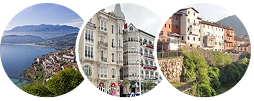

Everything you need to know for 2 or 3 days in La Rioja
There are so many things to see and do in La Rioja that, even if wine tourism isn't your main interest, we usually recommend at least two or three nights, whether visiting on a short break or as part of a broader northern Spain holiday or a tour around the Spanish Pyrenees.
At Caminos by Casas Cantábricas, we design bespoke touring journeys and in Rioja, we’ve uncovered captivating destinations along with exceptional places to stay. With more than 40 years of experience arranging holidays in Spain and Portugal, we are ideally positioned to help you craft the perfect itinerary and get the most out of your time in the region.
The Rioja wine region spans four provinces, but Rioja Alavesa and Rioja Alta, in the Ebro Valley west of Logroño, are the best areas to include in any independent self-drive wine tour for sampling some of Spain’s finest wines. From there, you can easily head into the mountains to the north and south.
Here’s our guide covering all the La Rioja highlights…

La Rioja Alavesa
At the southernmost point of the Basque Country, in the lee of the Sierra de Toloño, La Rioja Alavesa has one foot in northern Spain, the other in inland Spain. You’ll find medieval walled villages alongside cutting-edge modern architecture, as well as a fine collection of prehistoric dolmens and necropolises.
Laguardia is the main centre, but San Vicente de Sonsierra and Labastida are also well worth a visit, and Elciego, with Frank Gehry’s Riscal building, shouldn’t be missed.
La Rioja Alta
In La Rioja itself, there are countless wineries to visit and historic old towns to wander around. Haro is the centre of the wine trade and the place to visit bodegas, but for a bit of life don’t miss Logroño, the region’s capital, and if you have time, the wonderful Wine Culture Museum of Dinastía Vivanco in Briones.
Into the mountains
Like most places you'll visit on a northern Spain holiday, or indeed a visit to Inland Spain, the vineyards of La Rioja are surrounded by mountains. From the Rioja Alavesa, you’re quickly into the Sierra Toloña or over to the Izki Nature Park for totally contrasting scenery and the chance of a round of golf. Toward Soria, the Sierra de Cameros has acres of native woodland, great for hunting mushrooms, even truffles, trout fishing, and getting back to nature.
TABLE OF CONTENTS
6 LA RIOJA HIGHLIGHTS
LA RIOJA SPECIAL PLACES
La Rioja Highlights
Laguardia
Where History and Wine Flow Together
Strategically placed upon a small hill looking out over the plains, the historic walled town of Laguardia is the perfect base from which to explore the Rioja wine region. Populated since Neolithic times, as the local remains and dolmens prove, the town became particularly important in the Middle Ages when the kings of Navarra built an important palace / fortress there to defend against the Moorish and Castilian invaders. In the 15th century Laguardia passed into Castilian hands and was incorporated into Alava. This began a period of peace and the development of the wine industry with bodegas directly underneath the streets and houses.
Today Laguardia is a pedestrian town, as vehicles cannot enter the town walls due to the risk of these cellars caving in! The town itself is perfectly preserved and a joy to wander around. There are several bodegas, the fortifications and don’t miss the well preserved polychromic archway in the church of Santa Maria. There is a good selection of bars and restaurants and interesting shopping especially for those with an interest in wine. Nearby there is plenty to explore with several dolmens and a Bronze Age settlement within a short drive. There are, of course, a wide selection of vineyards nearby some of which have employed the world’s best architects. For walkers there are plenty of trails in amongst the vines just below the town or for the more adventurous there are the nearby Cantabrian Mountains and the Natural Park of Izki with mountains in excess of 1000m.
Haro
The Wine Capital of Rioja
The attractive old town of Haro, capital of La Rioja Alta, home to many of the great bodegas of La Rioja (Cune, Bodegas Bilbainas, Martinez LaCuesta, Paternina..), though prosperous, has a pleasant, laid back air. It is very relaxing just to sit at one of the cafes, sampling the “local tipple” in the arcaded Plaza de la Paz with its old fashioned bandstand and soak in the gentle, unhurried atmosphere. Off the square is the Renaissance church of Santo Tomas with its Plateresque façade and the Baroque Basilica de la Vega and some fine old palaces.
The first town in Spain to have electric street lighting, it naturally has a good range of bars serving delicious tapas of the region and some memorable restaurants including the long established and atmospheric Casa Terete which just serves exquisite roast baby lamb with salad and bread. There are some wonderful food and wine shops too, full of beautifully bottled delights of the local area. For a completely different atmosphere, the best time to come is the last week in July when the fiestas of San Juan, San Pedro and San Felices are celebrated with a grand “Batalla de Vino” (Battle of wine).
Logroño
From Laurel Street to the Banks of the Ebro
The capital of La Rioja, Logroño is a modern city often overlooked by visitors; yet it is an important staging post on the Camino de Santiago with a pleasant old town and a lively bar scene centred on the famous Calle Laurel which boasts over 200 bars – the pilgrims favourite!
There are of course interesting bodegas to visit, perhaps the best being Marques de Murrieta y Gay, and for modern art fans there’s the Museo Wurth on the outskirts of the city.
Sierra de Cameros
Mountain Villages and Woodland Trails
Sparsely populated and covered with immense native woodlands the Sierra de Cameros Nature Park, south of Logroño towards Soria, is a wonderful place to get back to nature Criss-crossed by ancient paths and drovers roads it’s a walker’s paradise and there are six well-marked routes within the park itself. Nature lovers will find plenty to marvel at with many birds of prey, deer, otters, and rarities such as the Iberian muskrat and European mink.
The area is ideal for mountain-biking, there’s horseriding in Nevera de Cameros and watersports at the Gonzaléz Lacasa reservoir. All along the valley are interesting, well preserved, stone-built villages; Torrecilla de Cameros, Ortigosa de Cameros, Villoslada de Cameros and Lumbreras, the highest village in La Rioja. And don’t miss Viguera with its castle and viewpoint giving spectacular views to the cliffs. All are quiet rural communities but have some kind of shop and bar/restaurant.
Ezcaray and Valle de Oja
Hiking and Village Life around Ezcaray
Head south from Santo Domingo de la Calzada into the beautiful valley of the river Oja and you’ll come to the lovely village of Ezcaray. Once wealthy from the wool trade (and still famous for its fine blankets) the town is now a popular resort, both in the winter for skiers at nearby Valdezcaray, and in the summer when it is popular with the Basques in particular.
There’s good walking, cycling and all mountain activities in the Sierra de la Demanda just above the town as well as plenty of picnic spots. There’s a nice swimming spot in the river as it passes the village or there are outdoor pools in Ezcaray itself and nearby Valgañon (the latter has a reasonable restaurant and good grounds to relax in).
For many the main attraction here is the Basque style ‘poteo’ (literally pub crawl, but with a gastro edge) with countless bars laden with elaborate tapas – accompanied by the local wines of course. Life is in the street and terraces and there’s always a cheerful family atmosphere. There are also some outstanding restaurants here including the renowned Echaurren.
Dinastia Vivanco Wine Culture Museum
The Story of Rioja Wine
If you’re in the Rioja you’re probably a wine fan and you’ve probably already seen your share of wine museums, or worse still been dragged around by a friend or partner whose enthusiasm exceeds your own… this one is very different.
Opened by the King of Spain in 2005, this is surely one of the world’s best wine museums. Not only are there the expected artefacts associated with the making, tasting and drinking of wine, and the educational videos and displays regarding the history and modern practice of viniculture, but also a wealth of treasures associated with the culture of wine from Baccus to the present day and from all over the world.
If you can, allow a few hours and enjoy lunch in their renowned restaurant, and don’t miss Briones, one of the prettiest villages in La Rioja.
La Rioja Special Places
Valle de Najecilla
Perfect for Quiet Walks and Scenic Drives
To really get away from it all the Valle de Najecilla, between Nájera and the Urbión mountains, is another vast unspoilt wooded valley, idyllic and very popular with walkers and nature lovers, where the sheep and cattle wander freely. Visit the picturesque villages of Viniegra de Arriba and Viniegra de Abajo, the latter right on the Najecilla river and seemingly lost in time (a paradise for fishermen). You can canoe down the river and the area is very popular for cyclists and mountain-bikers. For walkers there are signposted paths, the longest from Viniegra de Abajo through to Ortigosa de Cameros.
The small town of Arguiano is worth a visit for the 15th-century Monastery of Valvanera. The town is famous for the Fiestas de la Magdalena, celebrated on the 22nd of July, where crazy stilted dancers whirl down the cobbled streets relying on the crowds to catch them and save their necks.
San Millán de la Cogolla
Yuso y Suso Monasteries
At the bottom of the village of San Millán has developed around two monasteries. Suso, which has Romanesque and Mozarabic features, dates from the 10th century, was built on the site of an earlier 6th-century temple and holds the tomb of St Emilian, whilst Yuso, the “Escorial de la Rioja”, was built in the 16th century by Benedictine abbots. Both are now World Heritage Sites and said to be the cradle of the Castilian language, housing some of the earliest manuscripts ever written in the Spanish language. The town’s name “de Cogolla” derives from a slang word for the monk’s habit.
Nájera
Gateway to La Rioja’s History
The ancient capital of Navarra and La Rioja (to 1076) and the resting place of the royal families of that time. The monastery of Santa María la Real holds the royal tombs, but the village has plenty more to see, including the monastery of Santa Elena. Edward, the Black Prince, fought in the Battle of Nájera in 1367, intervening in a Castilian Civil War on behalf of Pedro of Castile.
Cuzcurrita del Río Tirón
A Quaint Stop in the Valley of the Tirón
A pretty, unspoilt village with some impressive stone-built houses with coats of arms dating from the 18th century. There’s a nice riverside walk and two good restaurants in the village.
Briones
A Picturesque Stop Overlooking the Ebro Valley
On a bend in the Rio Ebro, the impressive old village of Briones has been declared a ‘Conjunto Artístico-Histórico’ (effectively a ‘listed’ village) due to its well-preserved medieval streets and numerous buildings of historical interest. It has several colourful fiestas throughout the year, and there are a few good restaurants in the village. The Dinastía Vivanco Wine Culture Museum, just below the village, is not to be missed.
San Vicente de la Sonsierra
A Fortress Village Overlooking the Ebro
Best known for its auto-flagellants who whip themselves to bleeding as a penance during the Easter processions, the rest of the year it’s quite a pleasant little village with a medieval bridge and a church perched at the top, commanding lovely views over the vineyards.
Abalos, Navaridas, Lanciego, Samaniego, Labastida
Charming villages worth a visit
Small villages of La Rioja Alavesa, nothing outstanding but worth moseying around, plenty of stone-built palaces and interesting churches. Look out for local fiestas.
Santo Domingo de la Calzada
A Pilgrim’s Town on the Camino de Santiago
An important point on the Camino de Santiago, Santo Domingo is of interest for its cathedral. Part-Romanesque, part-Gothic, its main claim to fame is the legend of the ‘chicken which sang after being roasted’ and where a cock and hen are kept in an ornate cage set into the cathedral wall.
Izki Golf
Tee Off Amid Stunning Basque Landscapes
Designed by Seve Ballesteros and set in the beautiful nature park of Izki in the Sierra Cantábrica, halfway between La Rioja Alavesa and Vitoria, Izki Golf is actually two courses in one - Urturi, a full 18-hole course, and Lagran, a 9-hole par 4. There is a driving range as well as a bar and restaurant offering good local fare.
Riojan Wine
Volumes could be written about the Riojan wines, not possible to do that here, but we hope the following might be useful. Most wine drunk in La Rioja is red (though whites and rosés are also made) and on a wine list in a restaurant they will be divided into the following categories:
Cosechero/joven/del año – Wine from the harvest of the year.
Crianza – This category corresponds to wines which are in at least their third year and have spent a minimum of one year in oak casks.
Reservas – Wines with a minimum of three years’ ageing between cask and bottle and at least one year in the oak cask.
Gran Reserva – These are wines from exceptional vintages which have been aged for a minimum of two years in oak casks and three years in the bottle.
Recommendations
There are nearly 600 producers in total but here are a few favourites: Campillo, Remelluri, Ysios, Tondonia, Ardanza, Cune, Viña Arana, Izadi, Samaniego, Remirez de y Ganuza, Marques de Riscal, Marques de Murrieta, Salceda, Muga, Ondarre, Baron de Ley, 200 Monjes.
Winery Visits
Some require advance booking and all have limited visiting hours, so we recommend that you consult the web page or ask your hotel for assistance.
"Temples of Wine"
In recent years the region, and in particular La Rioja Alavesa, has seen a fashion where the leading wineries have called upon top-flight modern architects to design their bodegas for them – they’ve become known collectively as ‘Temples of Wine’. Here are a few of the most outstanding…
Bodegas Ysios
The Modern Face of Traditional Rioja
Designed by the famous Valencian architect Santiago Calatrava, the undulating forms of the Ysios winery building harmonise well with the rolling vineyard landscape and the Sierra de Toloña behind. Visiting times: Monday to Friday: 11:00, 13:00 and 16:00; Saturday & Sundays: 11:00 and 13:00 (prior arrangement).
Address: Laguardia
Tel: +34 945 600 640
Web: www.lariojaenoturismo.com/bodegas-ysios
Email:
Marqués de Riscal
Where Tradition Meets Frank Gehry’s Vision
The Marqués de Riscal ‘Ciudad del Vino’ in Elciego, designed by Canadian architect Frank Gehry (he of Guggenheim fame), is certainly not to be missed. Perhaps somewhat incongruous in its rural surroundings, you’ll either love it or hate it. Visits are to the bodega itself; you can only view the hotel complex from the outside.
Visiting times: Consult web
Address: Elciego
Tel: +34 945 180 888
Baigorri
Gravity-Fed Wine, Crafted with Precision
Designed by Basque architect Iñaki Aspiazu Iza and almost entirely underground, the Baigorri bodega is quite unique. The entire production process is developed vertically using gravity to drive the process in such a way as to allow the grapes to ferment without damaging them.
Visiting times: From Tuesday to Saturday from 11:00 to 18:00
Address: Samaniego (on the road from Laguardia to Labastida)
Tel: +34 945 609 420
Email:
Web: www.bodegasbaigorri.com
Viña Real
A Modern Icon Among Classic Vineyards
Designed by the Bordeaux architect Philippe Mazieres, the imposing Viña Real bodega takes the form of a giant wine barrel in wood, steel and concrete. Part of the Cune group.
Visiting times: Monday to Sunday 10:00-18:00, Sunday 11:00-15:00
Address: Ctra. Logroño–Laguardia
Tel: +34 941 304 809
Web: www.cvne.com
Bodegas Heredad de Ugarte
Heritage, Innovation, and Exceptional Rioja Wines
Another underground bodega with a network of caves and tunnels reaching two kilometres long and 20 metres deep.
Visiting times: From Monday to Friday: one visit at 12:00 (in August also at 17:00). Saturdays and Sundays: three visits 10:30, 12:00 and 13:15. From Easter onwards: visit with tasting Saturdays at 16:30.
Address: Paganos
Tel: +34 945 28 28 44
Web: www.heredadugarte.com
Email:
Bodegas Campillo
Where Heritage Inspires Excellence
The first winery in La Rioja to have an architect-designed bodega, nowadays so common in the area. Just down the hill from Laguardia and one of our favourite Riojas, difficult to find in the UK.
Visiting times: Monday to Friday: 11:00, 12:00 & 16:00. Saturdays: 11:00, 13:00 (tasting course) (No booking required)
Address: Laguardia
Tel: +34 945 60 12 28
Traditional Bodegas
If modern architecture isn’t your thing or you just fancy seeing the more traditional side of Riojan winemaking, there are plenty of bodegas still doing it the old way…
Bodegas El Fabulista
Bold Wines Inspired by Tradition
In the town of Laguardia itself, seven metres beneath the birthplace of ‘El Fabulista’, this bodega offers a peek into what goes on under the streets and houses of the town. Offers tours in English. Visiting times: Monday to Saturday: 11:30, 13:00, 17:30 and 19:00; Sundays: 11:30 and 13:00.
Address: Laguardia
Tel: +34 945 62 11 92
Bodegas Carlos San Pedro Perez de Viñaspre
Family, History, and Wine
Also in Laguardia, eight metres under the streets in a building dating back over 200 years, is one of the few working bodegas in the town itself. Visiting times: Visits in English: Monday & Wednesday 13:15; Tuesday, Thursday, Friday, Sunday 12:15; Friday & Saturday 17:15.
Address: Laguardia
Tel: +34 945 60 01 46 / +34 605 03 30 43
Bodegas Remelluri
A Legacy in the Heart of Rioja
Near Labastida, this is a very traditional bodega, small and friendly, with a nice Hermita and a 10th century necropolis on the site. Visits include the possibility of a walk around the vineyard and surroundings. Address: Labastida. Visiting times: Visits last 30 to 90 minutes depending on the walk included. Call to arrange.
Tel: +34 945 331 801
Web: www.remelluri.com
Other Bodegas to Visit
Bodegas Bilbainas – near Haro, one of the oldest wineries.
Tel: +34 941 310 147
Bodegas Roda – near Haro and well set up for visits. Also offers visits in 4x4 to the vineyards themselves.
Tel: +34 941 303 001
Web: www.roda.es
Bodegas Cune – another of the older wineries, just north of Haro – interesting art exhibitions.
Tel: +34 941 304 800
Web: www.cvne.com
Frequently Asked Questions about Things to See and Do in La Rioja
Getting there
By Air
The nearest major airports with good international connections are Bilbao and Vitoria:
Bilbao – the main gateway to the region, with flights from Stansted, Manchester, Edinburgh and Bristol with EasyJet; from Heathrow with British Airways; and from Gatwick with Vueling. The drive to Logroño or Haro takes roughly 1.5–2 hours.
Vitoria – a smaller airport that occasionally operates seasonal flights from the UK, generally through charter or low-cost airlines. From Vitoria, it’s about 1–1.5 hours to most towns in La Rioja, depending on your final destination.
Getting around
As part of your package we will include a hire car. Normally we include a 4 door economy class car but please let us know if you would like something different.
Make it happen...
We hope we’ve inspired you to explore the characterful and welcoming Rioja wine region. For a focused, one-week getaway including the Rioja Alavesa and the surrounding sub-regions of Rioja Alta, our Discover the Basque Country tour offers an ideal introduction, combining famous wineries with World-class gastronomy destinations, elegant cities and scenic vineyard landscapes. Or head west and explore coastal Cantabria as part of the experience...our Taste of the North tour is a great option.
If your best connection to Spain is Madrid, please take a look at our Wine and Castles tour, which links Spain´s capital with the most prestigious wine regions.
Contact us - or give us a call on 01223 328721 to discuss your requirements - we're more than happy to combine and adapt the tours to suit your personal needs and ensure you get the perfect south Spain itinerary!