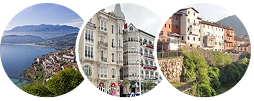

Everything you need to know for 2 or 3 days in the West Catalan Pyrenees
There are so many things to see and do in the West Catalan Pyrenees we usually recommend at least 3 nights in the area, whether visiting on a short break or as part of a broader Catalonia touring holiday or a tour of the Spanish Pyrenees.
The Caminos by Casas Cantabricas team, with more than 40 years creating and developing bespoke holidays in Spain and Portugal, have the depth of experience and local knowledge. Combined with our hand-picked collection of hotels, we’ll help you discover the very best of this spectacular region.
Here’s our guide covering all the West Catalan Pyrenees highlights…

Park Life - Aigüestortes y Estani de Sant Maurici
In the far north-west corner of Catalonia, tipping over onto the northern side of the Spanish Pyrenees, lies the spectacular National Park of Aigüestortes y Estani de Sant Maurici. Literally the “Winding Streams and Lake of Saint Maurice”, the name refers to the park’s main features – taking for granted, of course, the magnificent mountains!
With immense peaks soaring to over 3000m above and more than 200 glacial lakes this is certainly one of Spain’s most impressive National Parks, but do not be daunted! – it is also one of the most accessible, so the ideal setting for an independent motorbike adventure. From each of the valleys ‘taxis’ (small shuttle buses) take walkers into the heart of the park where there are walks in Alpine scenery for all abilities – including boardwalks for those with reduced mobility!
Val d’Aran, Vall de Boí and Vall d’Àneu
The three valleys which ring the park, Val d’Aran, Vall de Boí and Vall d’Àneu are truly unique, every view is a postcard and they have their own deep-rooted traditions, language and architecture. Each valley has a string of enchanting villages with stone-built houses clustered around early Romanesque churches, dating back to the 11th and 12th centuries in the Vall de Boí where they enjoy World Heritage Status.
For hikers and mountaineers the peaks of Pica d’Estats (highest in Catalonia, Bessiberi and the emblematic twin peaks of Les Encantats should suffice but if that’s not enough the regional park of the Pyrenees Catalans is just nearby and Pico Aneto, the highest in the Pyrenees, stands just over the border in Aragón, towering over the Val d’Aran.
Nature, action and adventure – all year round
In winter the valleys host Spain’s most prestigious ski resorts including Baqueira-Beret and in summer the whole area is a playground for lovers of mountain sports with endless opportunities for mountain biking, climbing – you name it!
Wherever you go on this Catalonia holiday you’ll find wonderful birdlife and high mountain flora in the most spectacular scenery.
TABLE OF CONTENTS
5 THINGS TO SEE AND DO IN WEST CATALAN PYRENEES
Things to See and Do in the West Catalan Pyrenees
Aigüestortes i Estany de Sant Maurici Natural Park
Catalonia's only National Park
Catalonia’s only National Park, Aigüestortes i Estany de Sant Maurici, is located in the heart of the Pyrenees mountains.
The stunning high-mountain landscape and the nearly 200 lakes, many of them of glacial origin, make this a truly unique location which has been inhabited by humans since the Neolithic. Due to the large range of altitudes, vegetation is diverse providing a good habitat for a wide variety of mammals and birds.
You can access the park from Boí by taking a 4×4 taxi to the Aigüestortes Plateau, where there is superb hiking for all abilities, including an accessible route along a wooden path that circles the plateau. For a longer hike, you can follow the trail to Estany Llong located above 2000m!
Val D’Aran
Unique culture and language
In the north-western corner of Catalonia, this ‘Valley of Valleys’ (‘Aran’ means valley in the Basque language which was spoken in the region until the 13th century) has been carved out by the Garonne River and sits on the French side of the mountain range, separated from the rest of Spain by the peaks of the high Pyrenees.
Its orientation means the valley has a more natural connection with France and the local architecture, flora and climate are quite different from the rest of the Spanish & Catalan Pyrenees.
Inhabited since prehistoric times, Val d’Aran is the only place where the Aranese (a peculiar and ancient dialect of Occitan) is spoken. It is taught in schools and protected by Catalan law. The tiny, picturesque villages dotted around the valley boast a rich cultural wealth, the beautiful Romanesque churches at Bossost, Salardú, Escunhau and Artíes standing out.
Vall de Boí
World Heritage Romanesque Architecture
The high concentration of churches, the consistency of the architectural style, and the incredibly good state of preservation, make the Vall de Boí’s Romanesque heritage truly exceptional.
Built in the 11th and 12th centuries, the churches represent some of the finest and best-preserved examples of the Lombard Romanesque or ‘First Romanesque’ style, known for skilled stone masonry, slim bell towers and rounded arches.
The churches reflect a feudal society and were sponsored by the wealthy Erill family and the bishopric of Roda de Isábena. In medieval times the tall bell towers were also used for communication and defence.
Though most of the frescoes from the valley’s churches were taken for preservation to the Museo Nacional de Arte de Cataluña in Barcelona some marvellous glimpses remain and one of the highlights is the Romanesque paintings in the church of Sant Climent de Taüll.
Through innovative video mapping, the original frescoes in the main apse and presbytery of the central nave are recreated, offering a stunning experience you shouldn’t miss!
Las Fallas
An ancient Pyrenean fire festival
Las Fallas (Falles in Catalan) is a summer festival named after the two-metre long, flaming wooden torches which are crafted by attaching pieces of pine wood to an ash stick (think ‘Frankenstein’ and ‘mob’ and you’re in the right direction).
Every year, originally during the summer solstice but now coinciding with the local festival, the towns in the Vall de Boí celebrate by “running the Falles.”
This tradition is linked to sun worship, giving thanks to the gods for the harvest and driving away evil spirits.
On the day of the Falles, everything starts at the Faro—a high point in the mountains with a good view of the village, the fallaires (torch bearers) light their Falles here before beginning the descent and proudly carry the fire down to the village, led by one of the young men.
Once down the hill the bearers run full pelt through the waiting throng in the crowded village square (this is not for the faint hearted) and are greeted with joy, music, and celebration. A large bonfire is made from the remains of the Falles that survived the descent, and the festivities begin, lasting all night.
Nature and birdwatching
Adventuring in the Pyrenees Mountains offers many opportunities for birdwatching.
In this part of the Catalan Pyrenees, there are plenty of well-marked trails through the mountains, which are a paradise for birdwatchers. The dramatic, wild landscapes are home to native birds of prey, including one of Europe’s largest and rarest vultures, the lammergeier.
The griffon vulture, the golden eagle, and the striking white and speckled short-toed eagle can also be spotted here, along with some smaller species.
In these valleys, you’ll come across Scots pines, beech trees, natural wonders such as the Nigritella orchid, the exotic carnivorous plant Drosera, and, on higher ground, firs and black pines.
Things to See and Do in the West Catalan Pyrenees
Vielha
The lively heart of the Val d’Aran
The gateway to the Val d’Aran and its main market town, the pretty ski resort of Vielha is well worth a visit.
The town occupies a strategic position at the head of the valley on the French side of the Pyrenees and was occupied by Napoleonic forces for five years in the early nineteenth century.
The main attraction these days is the town itself which, being the largest in the area, boasts a good selection of bars and restaurants, a bowling alley and an ice-skating rink as well as plenty of shops and agencies offering services and equipment to make the most out of the local mountain activities.
There are a couple of interesting museums to visit:
The Tower of General Martinhon; 17th-century manor house located in the old town of Vielha which houses the Ethnological Museum offering an overview of the history of the Val d’Aran, from prehistoric times to the present day.
The Ethnographic Museum highlighting the unique Aranese culture and folklore.
The Wool Museum, including a large weaving machine, the Müller Jenny, which was powered by the energy of the river and played a key role in the valley’s industrial revolution.
Val D'Aran Romanesque route
A living legacy of medieval art
Each of the 33 villages in the Aran Valley has its own church, and some of them are true treasures, showcasing beautiful Romanesque architecture and frsecoes, representing an artistic legacy of exceptional richness.
Most of these churches were built between the 12th and 13th centuries, the valley’s Romanesque style being characterised as ‘late Romanesque’ style. Some churches, however, still feature elements of Lombard Romanesque (see Vall de Boí), with doors adorned with rich iconography.
Each church is interesting, but here are our essential visits: Santa Maria de Arties, Sant Miquèu de Vielha, Sant Andreu de Salardú, Era Mair de Diu dera Purificación, and Santa Eulàlia de Unha.
Aranpark
Discover the native fauna of the Pyrenees
This wildlife park is located in the the spectacular Pòrt deth Portilhon and is home to a wide variety of animal species that live in semi-freedom.
Among the species you can see in the park are white and grey wolves, bears, deer, lynxes, vultures, ibex, otters, marmots, and other species that are characteristic of the area.
The circuit takes approximately two hours to complete and has an elevation gain of 100 metres, making it suitable for visitors of all ages.
Baqueira-Beret
Luxury, adventure, and breathtaking views all year long
The Baqueira-Beret ski resort, in the Catalan Pyrenees is one of the most popular winter resorts for skiing in the Catalan Pyrenees, thanks to its spectacular setting in the heart of the Val d’Aran and Valls d’Àneu, offering 153 kilometres of skiable terrain. It is a true snow paradise but can also be enjoyed thoughout summer.
Two chairlifts operate from early July to early September. A pass for these chairlifts includes one ascent and one descent on the same day.
Thanks to these chairlifts, you can enjoy the hikes (and the views!) while skipping the hardest part of the journey.
Vall de Boí
Where ancient churches meet the wild beauty of the Pyrenees
This small valley on the edge of Aiguestortes National Park, the Vall de Boí is renowned for its stunning natural beauty and well-preserved villages, each centred around a Romanesque church. While Erill-la-Vall and Boí Taüll are particularly noteworthy, the charming villages of Coll, Barruera, and Durro are also well worth a visit.
The valley is a paradise for hikers, offering a wide range of trails suitable for all levels. You can enjoy leisurely walks between the picturesque towns or challenge yourself with hikes to peaks exceeding 3,000 metres.
For those seeking a more accessible hike there’s a well-marked path linking all the villages – a great day out with plenty of opportunities for refreshment! Or take one of the 4×4 taxis from the village of Boí into the Aiguestortes National Park, where you’ll can enjoy relatively easy walks featuring breathtaking scenery of rugged mountains, crystal-clear lakes, and lush forests.
Whether you’re looking for a gentle stroll or an adventurous climb, you can get information, guidance and maps in the Casa del Parque Nacional in the village of Boí.
Sant Climent de Taüll video-mapping
History painted in light
The Romanesque paintings in the church of Sant Climent de Taüll, a key example of Catalan Romanesque art, are now displayed – to jaw-dropping effect – using video mapping technology.
The display recreates the original 12th-century frescoes in the main apse and presbytery.
The original artwork, currently housed in Barcelona’s Museu Nacional d’Art de Catalunya (MNAC).
After a botched restoration iin the 60s was removed some trace of the original frescoes were discovered but little remains.
Video mapping Sant Climent de Taüll
The video mapping however offers a unique way to ‘virtually’ restore the paintings, showing them as they looked in 1123. This innovative presentation provides a rare opportunity to understand how these churches were originally decorated and give an idea of the impression they would have had on worshippers. The show also helps visitors appreciate the Romanesque painting technique and explore the religious themes depicted in the murals.
Bausen and Carlac Beech Forest
A fairy-tale forest in the Pyrenees
The village of Bausén and the Carlac Beech Forest are two must-see destinations for nature lovers and hikers. The Carlac Beech Forest is a woodland of centuries-old beech trees that looks like something out of a fairy-tale, with majestic trees and lush ferns that will leave you speechless.
You can access the Carlac Beech Forest via a route from Bausén, which begins along the path that circles the upper part of the church and its cemetery, leading to the Sant Roc chapel via the Taishoères area.
Continuing along the mountainside, with a steep drop to the right, you reach the breathtaking forest of beech trees and ferns.
Andorra
Where mountains meet medieval heritage
Though the evidence of the first human settlements in the area dates back to the Neolithic, legend has it that Andorra was founded by Emperor Charlemagne in 805 to thank Andorrans for their help in fighting the Muslims.
After a long history of power conflicts, the principality gained its independence from the Spanish dukedoms and France in 1278 and it formally became a parliamentary democracy in 1993 when its first-ever constitution was approved.
Located in the border between Spain and France, Andorra is a mountainous land with steep mountain peaks and beautiful valleys. With an average elevation of around 2000mts, its highest peak is Comapedrosa (2942mts)
Andorra’s charm lies not only in its beautiful landscapes and its matchless opportunities for shoppers – it welcomes a sizeable number of visitors every year who take advantage of this tax-free paradise – but also in its Romanesque architecture.
In Andorra la Vella, the capital city and nerve centre of the Principality, and the town of Santa Coloma you can find fine examples of this artistic style such as the monumental Santa Coloma Church, La Margineda Bridge and San Esteve Church among others.
La Seu D'Urgell
A town of arches, rivers, and heritage
Located at the confluence of the Segre and Valira rivers and dominated by the Sierra del Cadi, La Seu d’Urgell is the most important village in the northern part of the province of Lleida. Its historic quarter, formed by beautiful, arcaded streets and old mansions, treasures the only Romanesque cathedral in Catalonia and some other outstanding examples of medieval architecture, painting and sculpture.
The stunning surroundings offer a wide range of sporting activities, and the traditional weekly market is still held in the historic town centre every Tuesday and Saturday.
Frequently Asked Questions about Things to See and Do in the West Catalan Pyrenees
Getting there
The Catalan Pyrenees are well served with flights from most UK and Ireland airports to Girona (Costa Brava / Pyrenees), Reus and Barcelona.
See individual tours for detailed options.
English airports | Girona connections | Reus connections | Barcelona connections |
London Gatwick |
| TUI | Easyjet, Vueling |
London Stansted |
| Jet2, Ryanair | Ryanair |
London Heathrow |
|
| B.A., Vueling |
London Luton |
| Easyjet | Easyjet, Ryanair |
London City |
|
| B.A. |
London Southend |
| Ryanair, Easyjet |
|
Manchester |
| Easyjet, Jet2, TUI, Ryanair | Easyjet, Jet2, Ryanair, Vueling |
Birmingham | Jet2, Ryanair | Jet2, TUI, Ryanair | Jet2, Vueling, Ryanair |
Bristol | Jet2, Ryanair | Jet2, TUI | Easyjet, Ryanair |
Newcastle |
| Jet2, TUI | Ryanair |
Leeds Bradford |
| Jet2, Ryanair | Jet2 |
Liverpool |
| Ryanair | Easyjet, Ryanair |
Nottingham |
| Jet2, Ryanair |
|
Cardiff |
| TUI |
|
|
|
|
|
Irish airports | Girona connections | Reus connections | Barcelona connections |
Dublin | Ryanair | Ryanair | Aerlingus, Ryanair, Vueling |
Cork |
| Ryanair, TUI | Ryanair |
Shannon |
| Ryanair |
|
Belfast |
| Jet2, TUI, B.A. (city) | Easyjet |
|
|
|
|
Scottish airports | Girona connections | Reus connections | Barcelona connections |
Glasgow |
| Jet2, TUI | Easyjet, Ryanair (Prestwick) |
Edinburgh |
| Jet2 | Ryanair |
Aberdeen |
| TUI |
|
Getting around
As part of your package we will include a hire car. Normally we include a 4 door economy class car but please let us know if you would like something different.
Make it happen...
We hope this guide has spurred your interest to visit this breathtaking region of the Catalan Pyrenees. For a compact, 10-night visit taking in both sides of the mountains, try our Catalan Pyrenees Adventure. For a point-to-point itinerary combining the north with some time on the coast, you may want to consider our Catalonia - Mar y Montaña tour, and for a more in-depth journey across the whole of Catalonia, our two-week Discover Catalonia - The Grand Tour truly lives up to its name.
Contact us - or give us a call on 01223 328721 to discuss your requirements - we're more than happy to combine and adapt the tours to suit your personal needs and ensure you get the perfect south Spain itinerary!