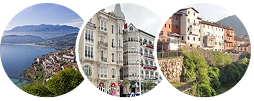






Discover the Sun-Drenched Landscapes of Catalonia on a Self-Drive Tour
Famous for its warm climate, sandy beaches, unique language and culture and, of course, Barcelona – not bad for starters , but our Catalonia tours have so much more to offer…
Carthaginians, Romans, Moors, Templars and Napoleonic troops – all have left their mark here. You’ll find fascinating medieval villages and castles, Romanesque churches and, in Tarragona and Empuria Brava, Spain’s most impressive Roman remains sitting aside the azure Mediterranean sea.
Follow the footsteps of Picasso, Gaudí and Dalí and and you’ll find a rich heritage and a thriving modern culture, whether in the museums of Barcelona, or marvelling at the Modernista architecture to be found throughout the region.
Whether you enjoy hiking, coastal walks or scenic driving, Catalonia offers unforgettable landscapes—from the high Pyrenees and the Costa Brava’s Camí de Ronda to the vineyards and rice fields of the Ebro Delta.
Known internationally for its fine wines and cava, the region boasts fish from the Med, rice from the Ebro Delta and olive oil everywhere, making it a pillar of the Mediterranean diet.
Easy to Reach from the UK
The popularity of Barcelona, the Costa Brava and the Costa Dorada mean that Catalonia is one of the best connected regions in Spain, with numerous direct flights from many UK airports to Barcelona, Girona and Reus every day.
Our tours take advantage of those links to get away from the masses and discover a different side of Catalonia.
Direct flights to Girona in the north and Reus in the south make point-to-point touring in Catalonia easy. Follow the coast, explore the cities or head into the Pyrenees – you’re sure to find adventure.
Why travel with us?
- Over 40 years creating tailor-made holidays in Spain and Portugal
- Independent self-drive holidays with expert planning and local support.
- Bespoke itineraries tailored by our Catalonia travel specialists.
- Delightful hand-picked hotels to suit every taste and budget.
- Fly to Catalonia and we’ll include a hire car.

A few favourite tours in Catalonia
Here's a selection of our most popular tours in Catalonia - use our interactive search for a full list of Catalonia tours


Practical Information
Catalonia - destination overview
With its warm climate, diverse landscapes and a cultural heritage encompassing ancient and modern, Catalonia is a wonderful region for a touring holiday.
Our touring area covers almost the whole region and can roughly be divided into three main areas:
Northern Catalonia – bordered by the Catalan Pyrenees and the Costa Brava.
The Catalan Pyrenees mountains, rising up to over 3000m at their highest point, stretch from the magnificent Aigüestortes i Estany de Sant Maurici National Park (Val d’Aran, Vall de Boí and Val d’Aneu) in the west all the way across to the Mediterranean. Breathtaking views are guaranteed but you’ll also find delightful medieval villages and World Heritage Romanesque churches as well as delicious local gastronomy.
The Costa Brava, with its aqualine coves, picture-postcard fishing villages and Cami de Ronda walking trail that reaches down almost to Barcelona. In the interior the city of Girona, the Garrotxa Volcanic Park and the medieval villages of Santa Pau and Besalú are not to be missed and Girona and Dalí’s Figueiras are well worth a visit.
Barcelona and the Centre – Barcelona dominates the central region with its dazzling architecture, beaches, port, Olympic Village, medieval quarter etc etc etc… but there are delights to be found in Montserrat, the spiritual heart of Catalonia, Cardona, with its immense castle (now the Parador), and along the coast in Sitges. The Cava producing region of Penedés is a delight for wine-lovers and hikers alike.
Southern Catalonia – The River Ebro forms Catalonia’s southern border and here in the rice fields of the Ebro Delta you’ll find a unique landscape and an immense diversity of birdlife. Tortosa and Miravet, just upstream among the mountains stand as testament to the historical importance of the river. Further north the Priorat wine region produces some of Spain’s most highly-prized wines in a breathtaking landscapes, and Tarragona offers truly awe-inspiring Roman ruins right by the beach. The Costa Dorada is never far away and though some stretches are over-developed there are still gems to be found in spots like Altafulla or Ametlla de Mar.
Some of our Catalonia holidays concentrate on one region, providing an in-depth experience of that area, whilst others combine regions, allowing you to compare and contrast different parts of the country but either way Catalonia’s compact geography means that new and exciting experiences are just around the corner!
Places to visit in Catalonia
Main highlights & cities in Catalonia
- Barcelona – the vibrant capital
- Costa Brava – Catalonia’s ‘wild coast’
- Bird-watching, sailing or cycling in the Ebro Delta
- La Garrotxa Volcanic Park
- Aigüestortes i Estany de Sant Maurici National Park
- Catalan Pyrenees – rising from the coast to over 3000m
- Tarragona – World Heritage Roman Remains
- The breathtaking Priorat & Montsant
- Girona’s fascinating Jewish Quarter
- Reus – birthplace of Gaudi and home of Vermouth
- Little seaside gems on the Costa Dorada
- Romanesque churches in the Vall de Boi & Aran
Things to do in Catalonia
For the active, curious traveller Catalonia offers endless opportunities under a Mediterranean sun.
The Catalan Pyrenees at the north of the region are a haven for walkers, nature lovers and mountain sports enthusiasts whilst the Mediterranean coast offers a paradise for water sports.
Take a step in from the coast and you’re in wine country, with wonderful walking and cycling (and maybe a bit of tasting) among the vineyards from Priorat to Penedés and Empordá in the north.
The Aigüestortes i Estany de Sant Maurici National Park is one of the most spectacular in Spain and offers wonderful accessible walking for all ability levels (even wheelchair users!). The Garrotxa Park, just south of the Pyrenees, offers a unique volcanic landscape and there’s fantastic walking throughout the region, right down to the Els Ports mountains in the very south.
The Camí de Ronda, which runs the length of the Costa Brava offers gentler hiking with truly stunning views and the Ebro Delta, most famous for its birdwatching, is also great for walking and cycling among the rice paddies - with flamingos flying overhead!
The region’s warm climate means that you can get out and about or take to the water at almost any time of year – here are some more ideas:
Visit Tarragona’s Roman Amphitheatre – right beside a golden, sandy beach on the Mediterranean.
Explore Girona’s Old Town – walk the city walls, cross colourful bridges, and visit the fascinating Jewish quarter.
Hike a stretch of the Camí de Ronda – stunning coastal path running the length of the Costa Brava
Explore Barcelona’s Gothic Quarter – medieval lanes, hidden squares, and lively cafés.
Marvel at the Romanesque churches of Vall de Boí – World Heritage churches set in beautiful alpine scenery.
Discover Montserrat – take the cable car, visit the monastery, and admire dramatic rock formations.
Visit the Sagrada Família – Gaudí’s soaring architecture and colourful stained glass.
Aigüestortes i Estany de Sant Maurici – follow mountain trails to mirror-like lakes and lofty, jagged peaks.
Taste Catalan seafood by the coast – try suquet de peix or grilled prawns in seaside taverns.
Get trekking in the Garrotxa Volcanic Zone – explore forested cones, lava flows, and peaceful rural trails.
Ebro Delta – rich birdlife, cycling through rice fields, tranquil wetlands.
Relax on the Costa Brava – swim in idyllic turquoise coves and explore fishing villages like Calella de Palafrugell.
Dive, sail or kayak in the Medes Islands and nearby – the Costa Brava is a paradise for water sports lovers
Ride the Val de Núria Rack Railway – up the narrow valley to a high-mountain sanctuary and peaceful walking trails.
Enjoy wine tasting in Penedès – visit cava wineries or head down to the Priorat for some of Spain’s finest wines.
Visit Figueres’ Dalí Theatre-Museum – step into the surreal world of Salvador Dalí.
Discover the delights of Catalan Modernist architecture - from Parc Güell and Casa Batlló in Barcelona to Casa Navás in Reus and don’t miss the marvellous ‘Cathedrals of Wine’.
When to go to Catalonia
About the weather in Catalonia
The climate in Catalonia is quite varied due to the mountainous landscape, yet the proximity of the Mediterranean ensures benign conditions across most of the region throughout the year.
The Pyrenees have a cooler climate due to their altitude, which tops 3000m in some points. In the winter it often snows, and indeed there are prestigious ski resorts like Baqueira-Beret, but in general the region enjoys a mild climate making it ideal for holidaymakers from March right through to October.
The Costa Brava, warmed by the Mediterranean, is considerably warmer than other parts of Spain which lie on the same latitude. On the other hand, though the weather here is typically Mediterranean, it is milder and enjoys a little more rain and cooling breezes than the Costa Dorada further south. Sun-lovers will find paradise here in July and August whilst hikers will get more out of the visit in the spring and Autumn.
The central region gets progressively warmer as you head south and Barcelona can be quite sweltering in the height of summer – though city beaches, cold beers and cava are never far away!
The south of Catalonia is, as may be expected, the hottest which makes this part of Catalonia ideal for a getaway from March through to late June and again though September and early October when you can witness the wine harvest. The south is perhaps best avoided at the height of summer by all but the keenest sun worshippers when the Costa Dorada is also at its busiest. The Delta de Ebro in particular can be very humid in the summer and mosquitoes can be problematic from mid-July through August. In late October and November the region can be prone to heavy rainfall.
Getting to Catalonia
By Sea - or drive through France
To reach the region by sea the nearest port is Bilbao (or Santander which is an hour further west). Our Costa Brava Run tour is designed to make use of the Brittany Ferries links to enable you to take your own car to Catalonia (and can be adapted to bring in any of the areas we tour in the region instead of or as well as the Costa Brava).
Should you wish to drive down through France we can also adapt any of our Catalan itineraries to fit with that – please call to discuss options.
By Air
Catalonia holiday destinations are extremely well served by air from the UK.
There are three main airports for our Catalonian holidays: Barcelona, Girona (near the Costa Dorada and Pyrenees) and Reus (near Tarragona and the Costa Dorada).
This opens up the possibility for one-way tours, flying into one airport and back from another, particularly by combining Girona in the north and Reus in the south.
More info – check the ‘Travel Options’ tab from within any particular tour for the best options for that trip.
Getting around
A car is essential for getting around and to make the most out of the visit as many of the hotels and attractions are not easily accessed by public transport.
If travelling by air we usually include a hire car (excluding nights spent at the beginning or end in major cities like Barcelona or perhaps Girona) whilst those coming on the ferry (see above) will use their own vehicle. In either case we will provide full driving instructions, GPS co-ords for the accommodation and essential information on driving in Spain and Portugal as well as a touring map of the area.
Please ask us if you wish to travel the Catalonia holidays with your own car.
Eating and drinking in Catalonia
Amazing Catalan Food
The cuisine of Catalonia is wonderfully varied as you might expect from a region which contains the high mountains of the Pyrenees and the Mediterranean coast as well as several different climate zones and cultures. Add to that ten denominated wine regions (see below) and olive groves everywhere and you really have a recipe to conjure with!
In the coastal areas seafood from the Mediterranean features strongly in local dishes such as Suquet de Peix (a traditional fish stew), or Buñuelos de Bacalao (feather-light salt-cod fritters), and of course delicious paellas, especially when combined with the sumptuous rice from the Ebro Delta. Simple grilled fish – a la plancha – is available everywhere and the Catalans do it better than anyone.
In the mountains you’ll find more hearty fare with a wide range of meat and botifarra sausage dishes like Olla Aranesa or Botifarra amb Monguetes (local suasage and white beans) which is considered the national dish. In season wild mushrooms are a very big deal in Catalunya and feature on special menus throughout the region.
Ubiquitous are the Catalan classics including Pa amb Tomàquet (toasted bread rubbed with fresh tomatoes, with olive oil, maybe garlic, sprinkled with salt), Escalivada (smoky, roasted vegetables, typically including aubergine, red peppers, onions, and tomatoes) and Allioli (a simple garlic sauce made with olive oil – not to be confused with garlic mayonnaise, you’ll get kicked out!).
In autumn Calçots are everywhere – similar to a spring onion but thicker and roasted over wood before serving with a romesco sauce (with tomatoes, roasted red peppers, toasted almonds, vinegar, and garlic). And wherever you go you’ll find Crema Catalana (a local take on crème brulee) so you can have fun comparing and contrasting and preparing your own league table of Cremas…
Fideuá, originally from Valencia but enthusiastically adopted by the Catalans, is also easy to find – cooked like a paella but with short noodles instead of rice and often includes meat as well as fish and is often served with Allioli – delicious!
As you travel around, you’ll discover local produce like the anchovies of L’Escala, the prawns of Palamós or locally caught mussels and oysters in the Delta del Ebro, as well as special dishes defined by the locality – all of which makes a trip around Catalonia endlessly fascinating for food fans.
Wonderful Catalan wines
Altogether there are ten wine growing regions in Catalonia, offering an incredible mix of heritage, flavour, and breathtaking scenery, the main ones being the Penedés, where Cava is produced, Alt Empordá and the tiny Priorat region further south.
The Penedès region is perfect for wine lovers and outdoor enthusiasts alike. Known for Cava, Spain’s famous sparkling wine made in towns like Vilafranca del Penedés and Sant Sadurní d’Anoia, it’s a great place to sip refreshing bubbles under the Mediterranean sun and you’ll also find fine table wines made with Xarel·lo for example, a local grape that adds a fresh, citrusy taste. Beyond the vineyards, Penedès offers fantastic hiking trails that wind through rolling hills, and the Mediterranean coast is never far away.
South of Tarragona there’s the magical land of the Priorat, a rugged, landscape where vines cling to the steep, rocky hillsides. The wines here are world-renowned for their rich, intense mineral flavours, owing to the slate-rich soils and unique microclimate. Priorat wines are deep and complex, and visiting this area feels like stepping back in time, especially with stops at villages like Siurana, Scala Dei and Gratallops. Like the Penedés the scenery and the hiking are second to none and the coast is just close by should you fancy.
In the north, close to the French border, you’ll find the Alt Empordà region where the Mediterranean breezes shape the wines. Here, the wines are fresh, crisp, and infused with a mineral quality unique to the coastal terroir. Some vineyards overlook stunning Mediterranean scenery, adding a touch of drama to the landscape and the wines alike.
Finally, don’t miss out on Catalonia’s vermouth tradition based around Reus and Tarragona. In Spain, and especially in the Tarragona region, Vermouth is more than a drink, it’s a ritual— ‘la hora del Vermut’ is a moment to pause and socialize, like a French aperitif – but much more fun!
Why our clients love our tours
Your satisfaction is our Nº 1 priority – read independent reviews of our holidays on AITO.com